
Top 10 video games of 2025
Christopher Nolan’s 2001 film, Memento, is my biography (minus all the murders) because my memory is garbage. Video game releases are the checkpoint flags I plant along the trail of my memory to recall important events.
A variation of the following conversation happens at least once every two weeks:
Friend: Hey, you remember when we all went to the fall festival our sophomore year of college?
Me: Yeah, that would’ve been around the middle of October 2008, and I was planning on ditching you guys to play Fallout 3 that day.
The Year of Our Lord Twenty Twenty-Five was awful and, to mix my movie metaphors here, there are one quadrillion reasons to Eternal Sunshine this entire year out of existence. Unfortunately, these 10 games make that quite difficult.
10. Dispatch
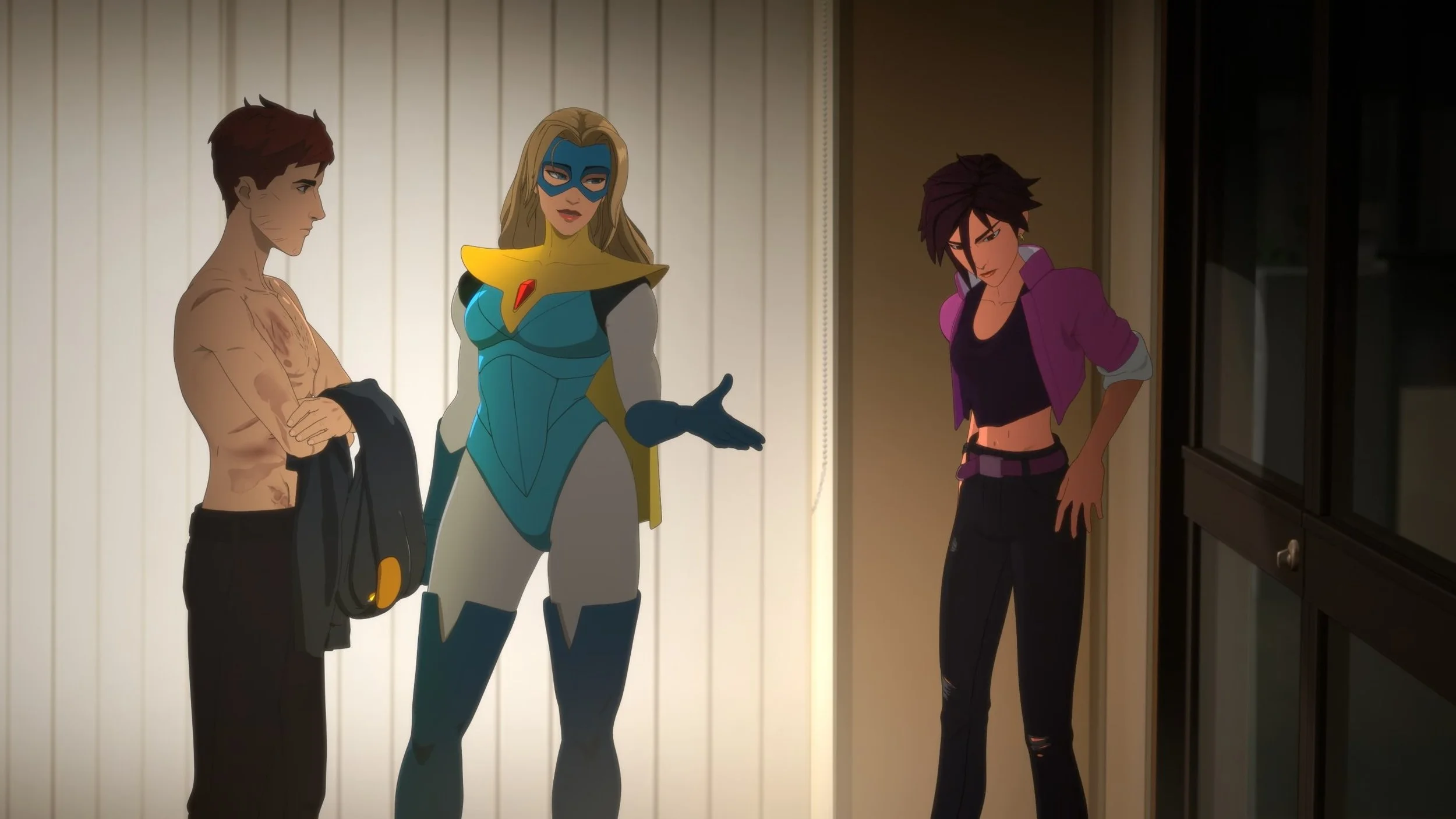
The Youth are saying Dispatch is Twilight for men, and… they aren’t wrong.
What if some of the folks responsible for the best Telltale Games (The Walking Dead, The Wolf Among Us, Tales From the Borderlands) all formed a new studio, traded in the rubber bands, glue, and paper clips holding their previous games together for Unreal Engine 4, and recruited a talented roster of amateur and veteran performers for one of 2025’s best video game ensembles?
Then you’d have Dispatch, a superhero workplace dramedy starring Aaron Paul, Jeffrey Wright, Laura Bailey, Matthew Mercer, and a bunch of influencers you’ve probably heard of. It has all of the hallmarks of the best Telltale games–sharp characterization, split-second decision making, and of course, consequences–and comparatively few of their shortcomings.
Even the dispatching itself is a welcome complement to the fairly non-interactive narrative that plays out across eight episodes. It’s not just “the part where you do stuff,” though. The dispatches are where the cast of zeroes-to-heroes develop a rapport, resulting in new team skills and some of the better quips Dispatch has to offer.
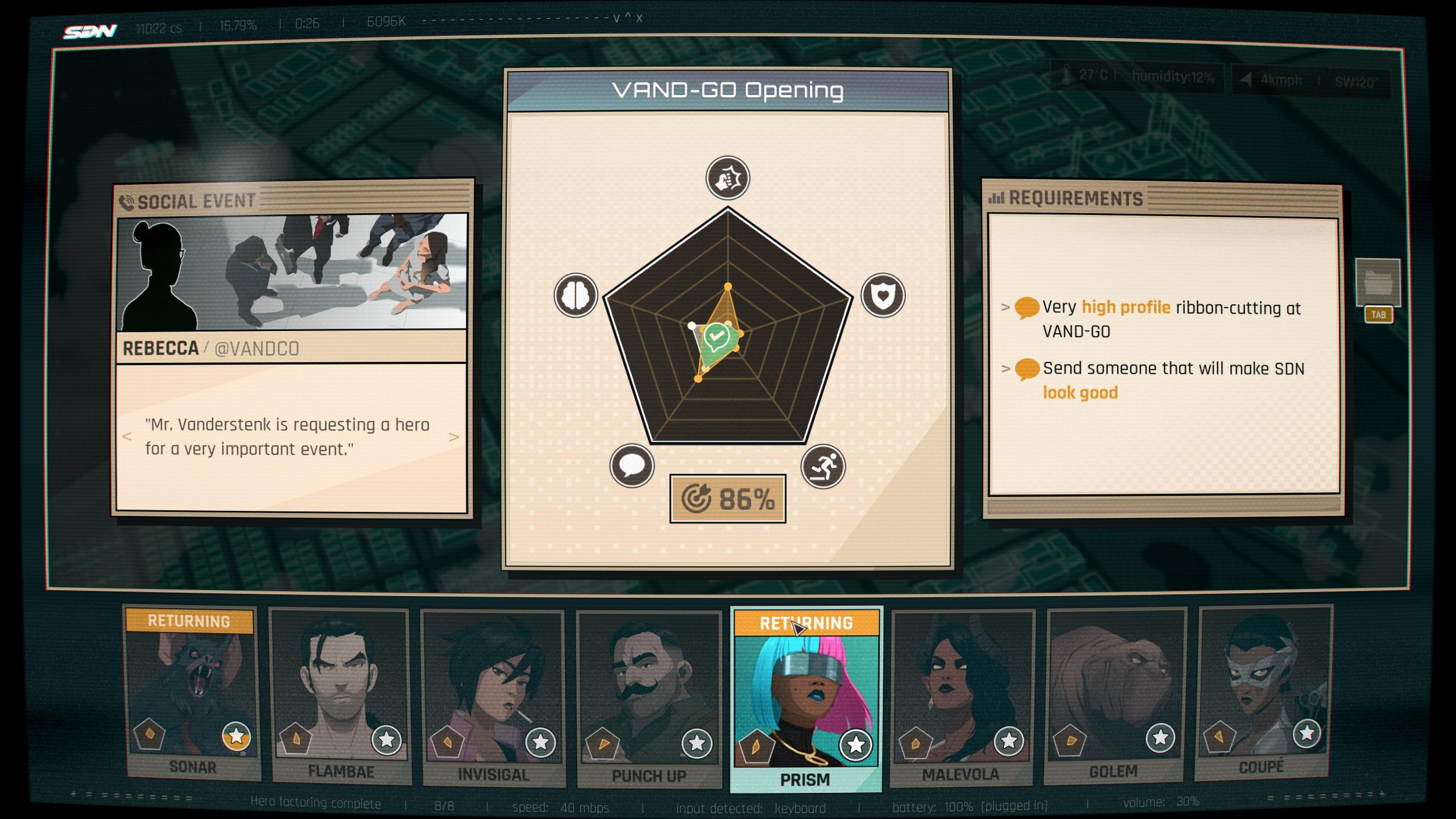
Choosing heroes whose stats reflect the demands of the mission at hand is a fun diversion between narrative beats.
Dispatch’s success in a time when audiences have grown numb to superhero narratives, particularly cynical ones, doesn’t surprise me. Despite the dick-punching, f-bombs, and general raunchiness, there is an earnestness at its core that connects in a way that the MCU has struggled to, at least lately.
9. Starvaders
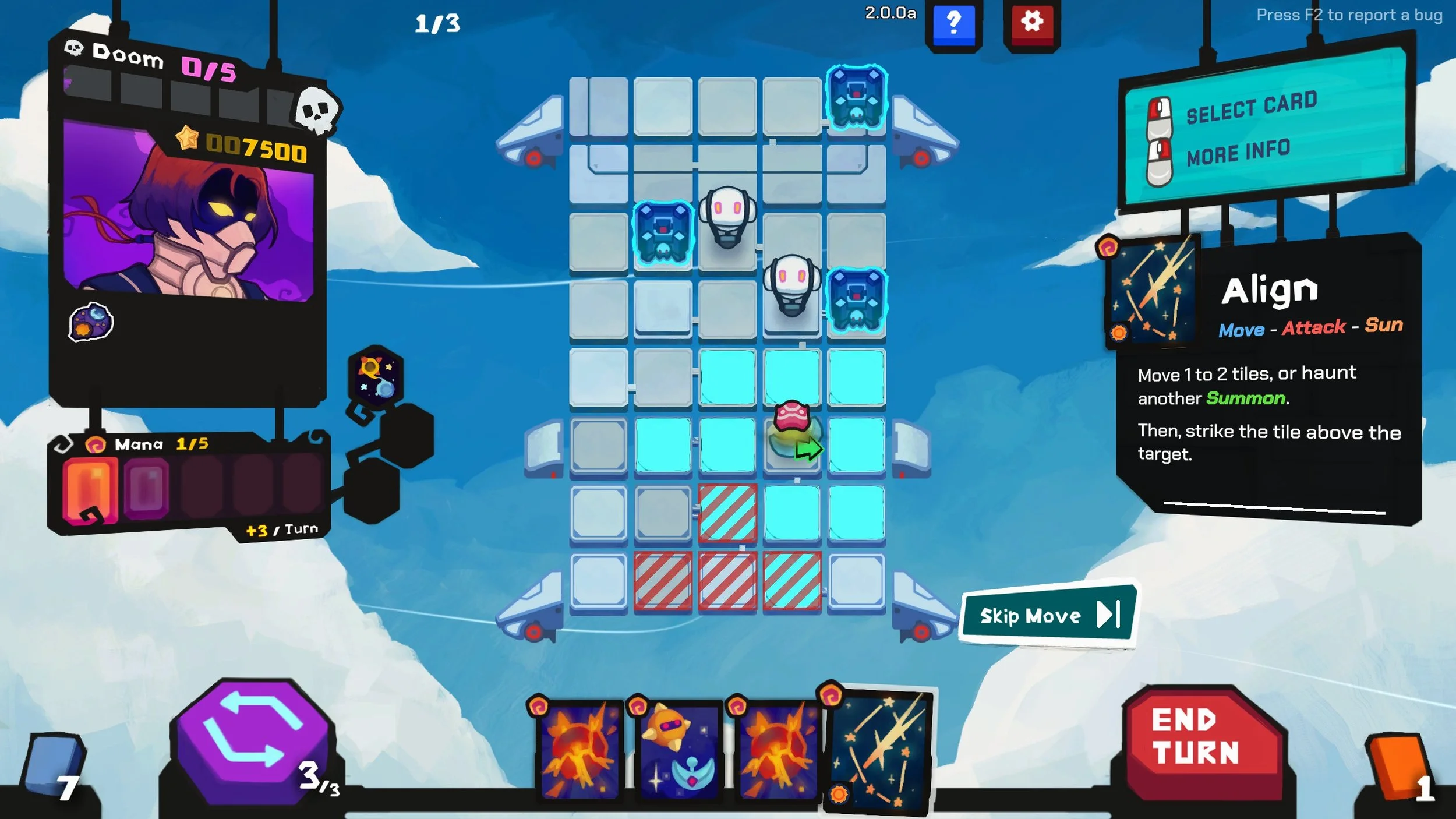
There’s almost always a way out of every sticky situation, if you stare at it long enough.
Playing 289 hours of Balatro in 2024 felt like entering into a common-law marriage, even by the standards of the roguelike deck-builder genre. But Starvaders, the little homewrecker, charmed me with its audio-visual presentation and variety of win conditions.
As the name would imply, Starvaders is structured like Space Invaders, with aliens descending from the top of the screen in turn-based (and tile-based) fashion. Your job is to use a combination of your own units on the field and cards in hand to defend the lower quadrant of the screen. Depending on the pilot you’re playing as, that might mean freezing invaders in place to halt their advance, ricocheting long-range spells across the field, or even detonating your own units to wipe out the enemy.
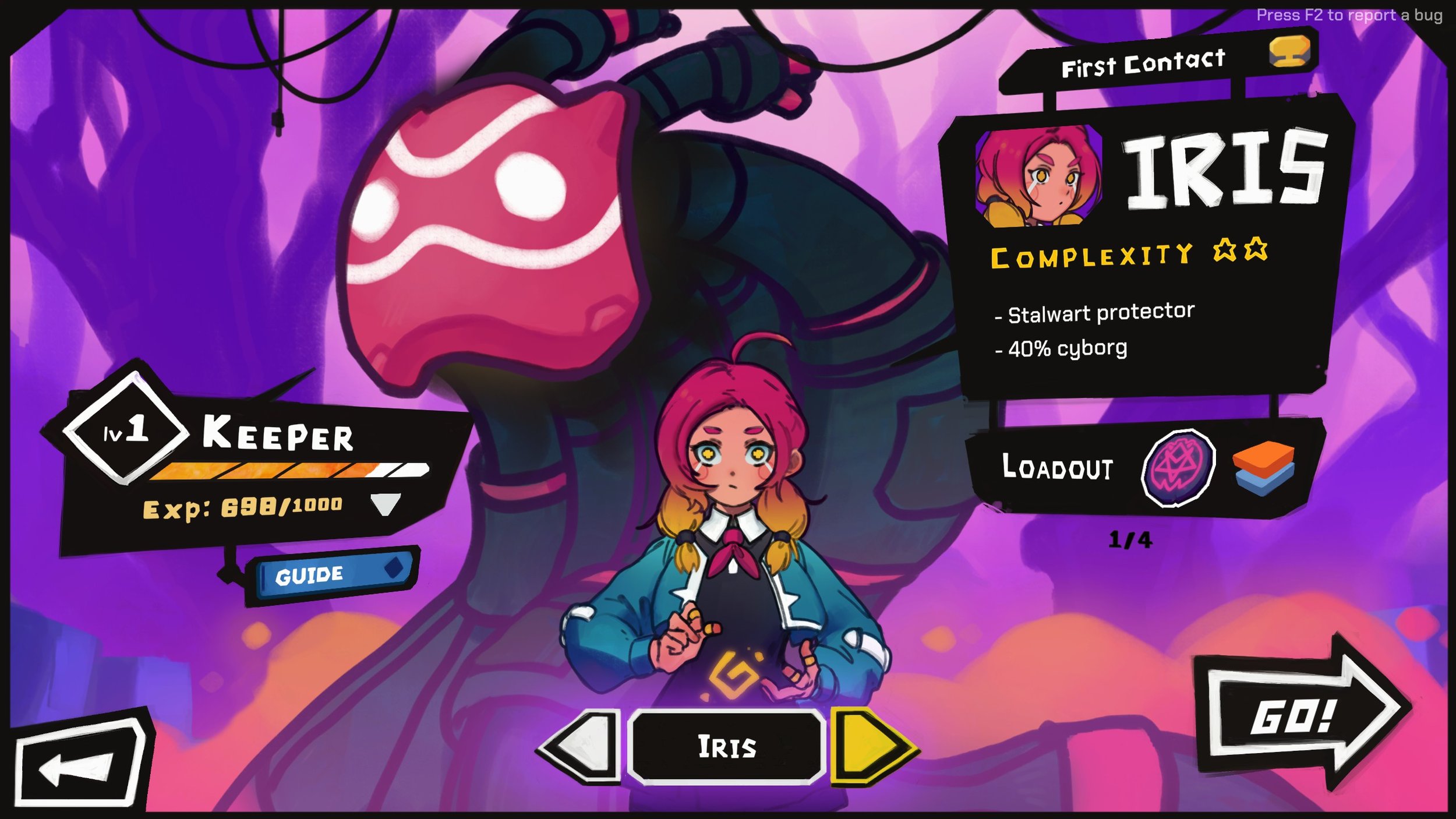
No disrespect to Slay the Spire or Monster Train, but Starvaders is the rare deckbuilder that I find consistently pleasing to look at.
The various pilots are not only distinct among themselves, but, as with any roguelike deck-builder worth its salt, each pilot has multiple paths to success. Success in Starvaders means taking what the game gives you, making smart additions and cuts along the way, and discovering new synergies on the fly.
Unlike Slay the Spire, Starvaders is unlikely to hold your attention for thousands of hours. But I don’t need every game in this genre to be a lifestyle unto itself. I was more than happy with the 30 hours I poured into Starvaders and, if you’ve made it to the end of this and endured me typing “roguelike deck-builder” like it’s a common expression, there’s a good chance you will too.
8. Citizen Sleeper 2
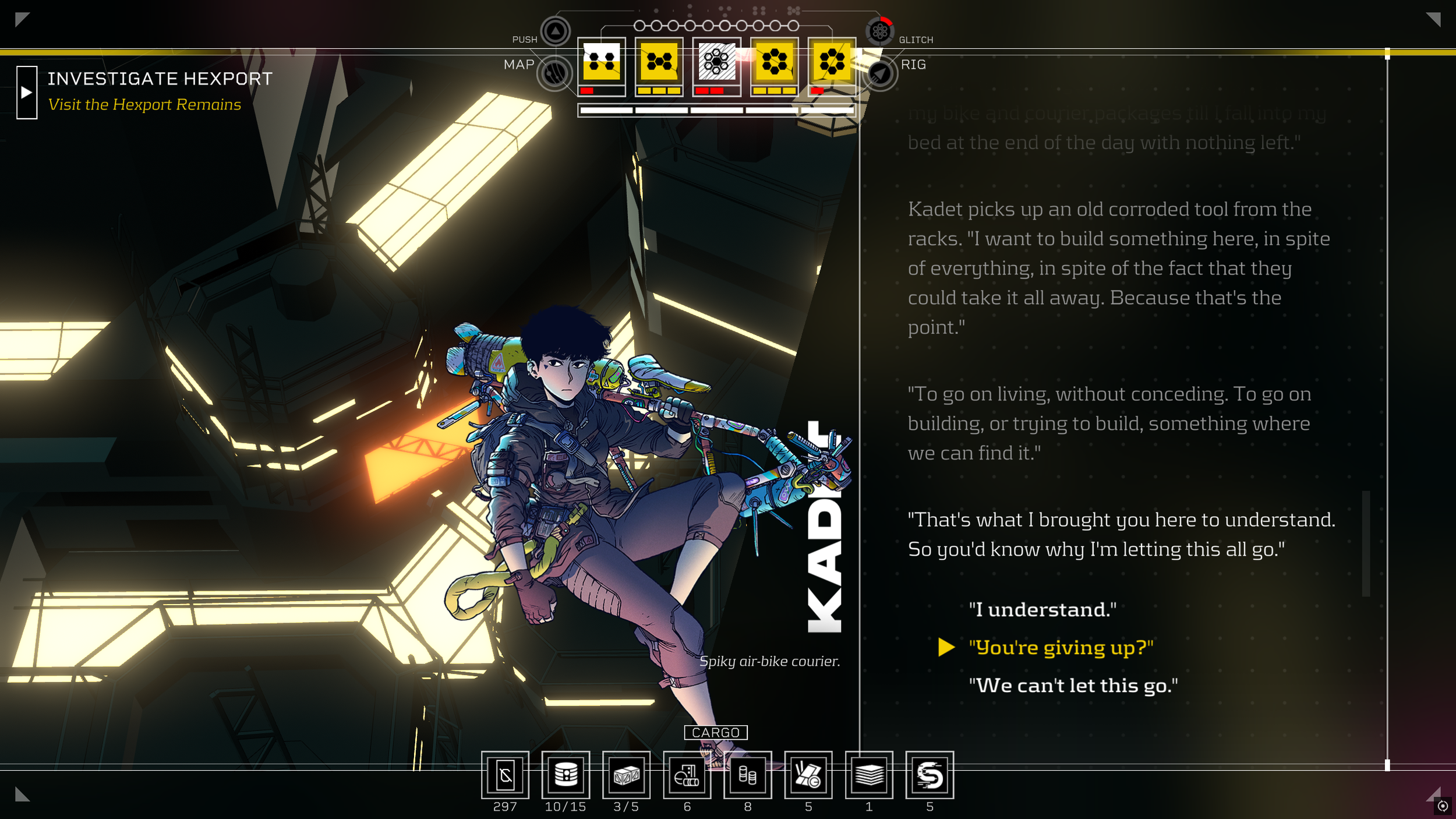
Citizen Sleeper 2 is a visual novel with an emphasis on visual. Guillaume Singelin returns as the artist responsible for all of the character portraits, and they’re just as great in the sequel.
Citizen Sleeper 2 was the first game I played in 2025. Despite the elapsed time, a small part of me is still with the sleeper, a human mind that has been digitized and uploaded into a robotic shell. The sleeper is running from some old acquaintances who have threatened you with indentured servitude. To survive, you must find allies, build community, and ultimately inspire resistance in your galaxy-spanning flight from your would-be captors.
Each day, you are assigned a number of six-sided dice that govern your decisions. A 5 or a 6 is a near-guarantee of success, 3s and 4s are a coin flip, and 1s and 2s are almost assuredly a negative outcome. This is an RPG, though, so you’ll level up, develop specialties, and find other ways to mitigate failure as you play.
Some days, 1s and 2s are all you have (Ain’t that just the way?), but the beauty of Citizen Sleeper 2 is that, like the best tabletop experiences, failure feels more like an alternate path to your goal rather than the end of the road.

Some of them are rougher around the edges (looking at you, Yu-Jin), but assembling this crew is the highlight of Citizen Sleeper 2.
It’s an improvement over the first game in every way, thanks to an even better script from Gareth Damian Martin and the sleeper’s lovable crew of allies. If building a team in Mass Effect and talking to them on your ship between missions holds any appeal for you, Citizen Sleeper 2 is worth your time. Bring your reading glasses.
7. Keep Driving
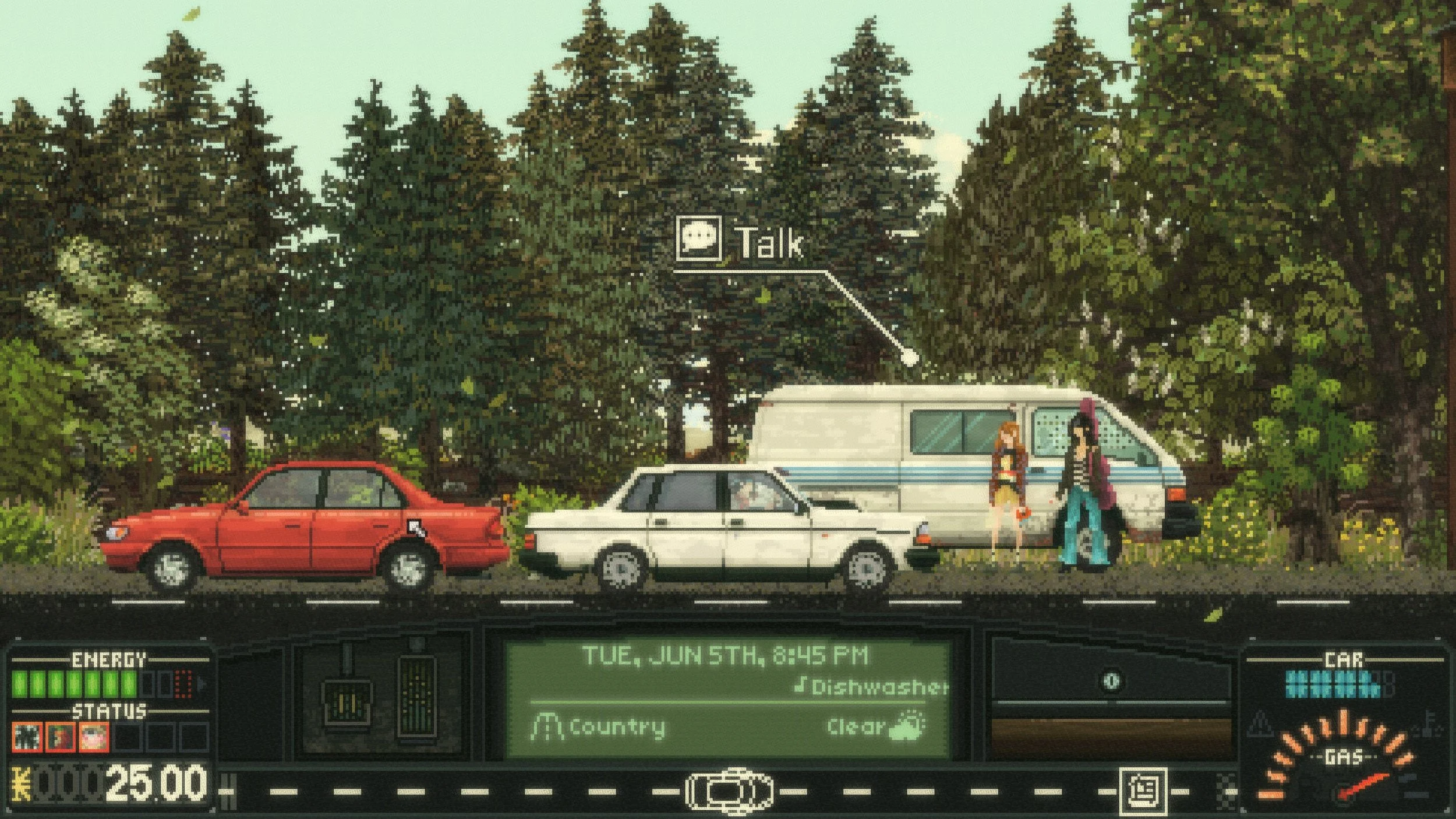
Keep Driving’s soft, nostalgic visuals is a perfect match for a road trip.
Have you ever wanted to throw some essentials into the backseat of a scuffed 1992 Volvo 240 and drive away from all of your problems? What happens when you can’t drive away from yourself?
Keep Driving is an emergent storytelling simulator in the guise of a teenage roadtrip. Equal parts Y Tu Mama Tambien and Oregon Trail, it’s a game that’s difficult to label despite my best efforts. There are management sim elements that involve Resident Evil-style inventory stacking, car maintenance and customization, and some first-person dungeon crawling that evokes Wizardry or Etrian Odyssey.
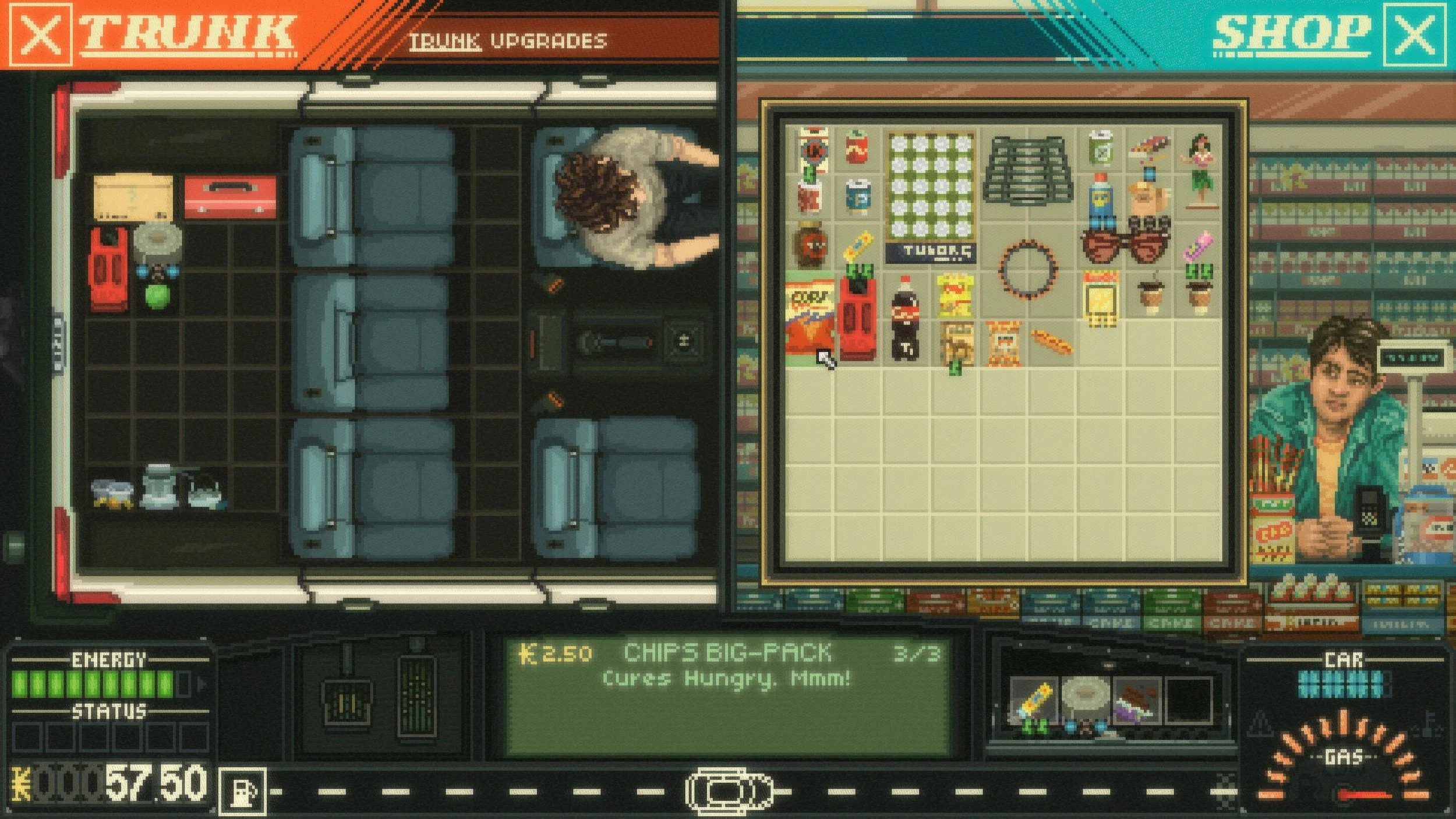
Best inventory management since Resident Evil 4.
There’s even some turn-based card combat with road trip-appropriate random encounters. You might run into a slow tractor, some stranded travelers with a flat tire on the side of the road, or, worst of all, a pothole. Occasionally, you might even pick up a hitchhiker or two that will become a party member, complete with their own story, questline, and set of skills.
Keep Driving is ultra-reactive to the player’s choices. Some consequences play out immediately, like getting pulled over by the cops with contraband in your backseat. Others take their sweet time, like that habit you developed of beelining for the cheap snacks at gas stations, or using cigarettes too often to manage your stress on the road.
And what road trip would be complete without tunes? Keep Driving’s soundtrack conjures nostalgia for a life I never lived that is so powerful that it made me question my IRL past decisions.
6. The Seance of Blake Manor
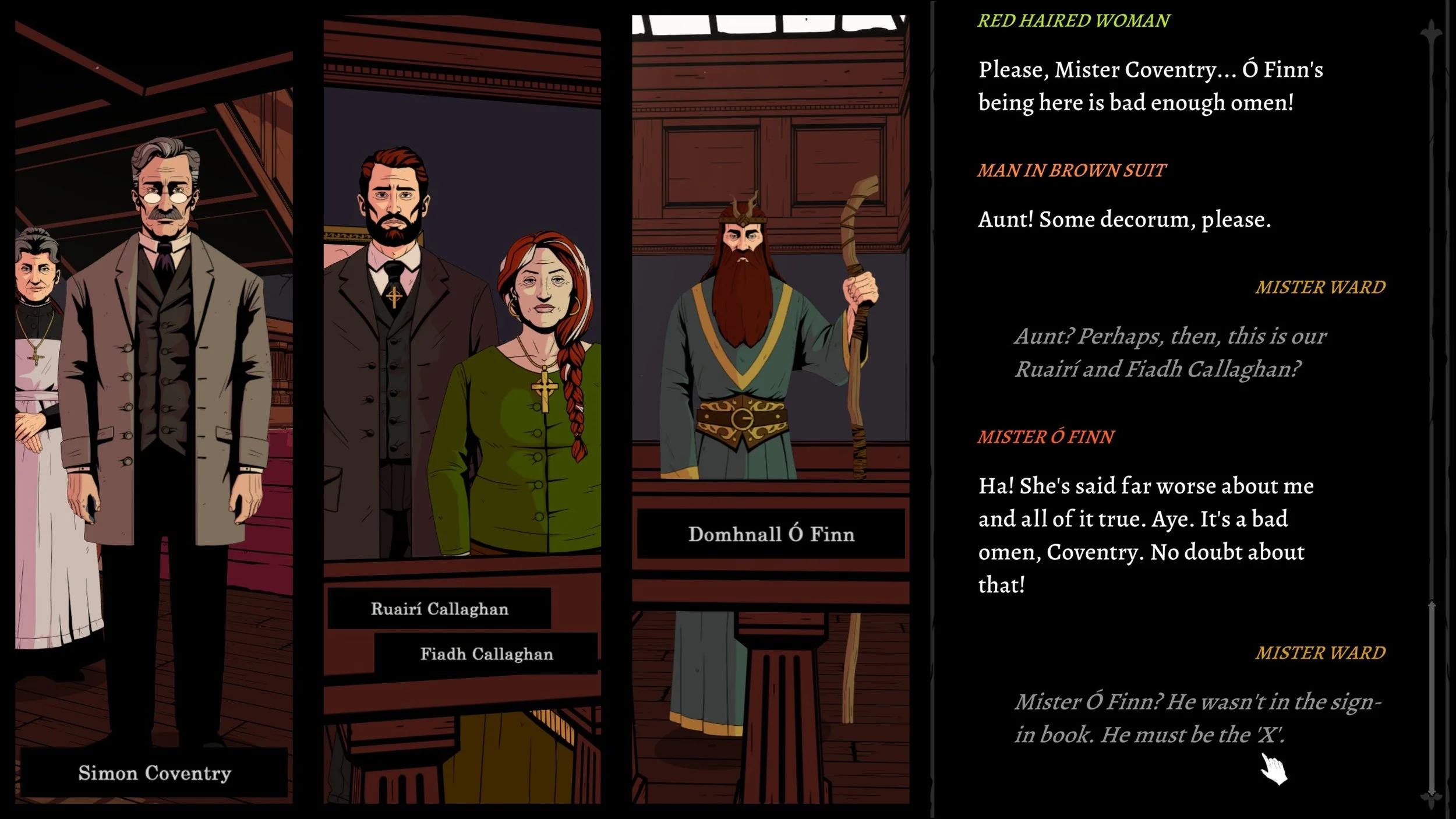
Ensemble casts are a recurring theme in my top 10 this year, and The Seance of Blake Manor has the biggest by far. You’ll get to know and love (or hate) two dozen guests during your weekend stay.
Like a shortsighted detective might, I almost missed this game. Of the games on this list, it’s the one that barely made it across the finish line (three days ago, in fact). But in retrospect, delaying this post for its inclusion was the only choice.
You are Declan Ward, a private eye who has been hired by an anonymous patron to find a missing woman. Her last-known location–a remote Irish hotel hosting a once-in-a-lifetime seance. This seance has attracted nearly two dozen eccentric guests from around the world, and all of them are suspects.
You are free to explore the vast hotel, attend gatherings, question guests, and sneak into their rooms at your own leisure. The only catch is that every person or object you interact with costs you one minute of your time. Declan has roughly a weekend to find the culprit and unravel the mystery. Or rather, mysteries.
Beyond the unique passage of time, Blake Manor’s other quirk is that a number of other conundrums reveal themselves along the way, including a unique quest line for each guest. Many of them intertwine with each other and the central disappearance, and tugging on one thread will often unravel another.
A mind map of people, places, and things organizes the evidence you’ve gathered, and provides a visual space for making the connecting of dots more literal than figurative. The trick is to not be overwhelmed by the sheer number of interactable objects littering Blake Manor. You must use your own discretion to determine what’s important and make the best use of your time, though you’ll eventually intuit what’s worth inspecting in any given room.
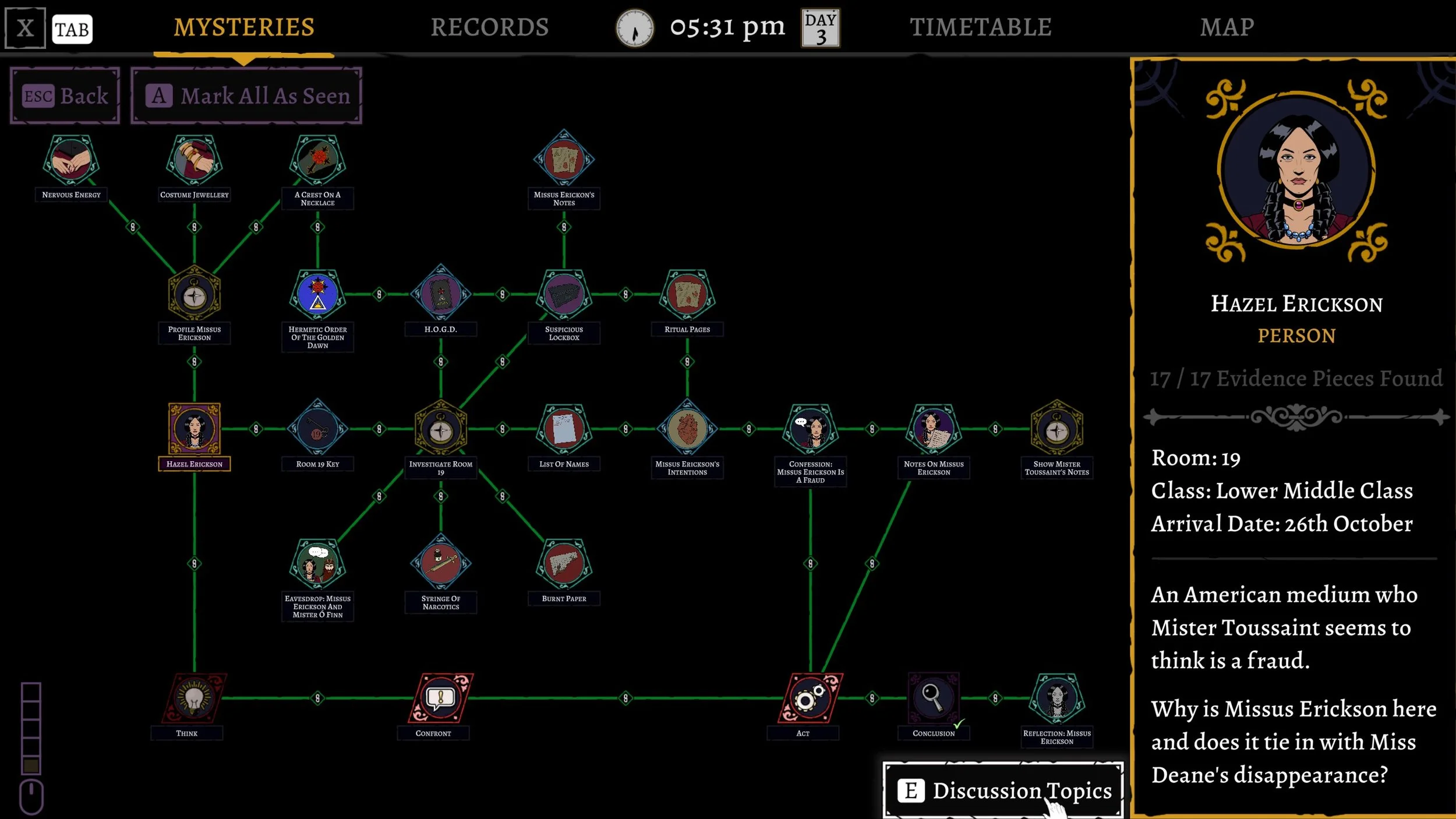
The mind map is a great visual representation of all of the clues you’ve gathered thus far on each distinct mystery.
As you gather evidence for a particular mystery, Declan will eventually gain the ability to form a hypothesis using keywords associated with your findings and then confront a guest. Occasionally, you, as in the person playing the game, may know something before Declan can reach the same conclusion, but you still need to find the evidence before you can proceed. It’s an annoying shortcoming that trips up even the best deduction games, but it is utterly overshadowed by everything The Seance of Blake Manor gets right. Its attention to Irish mythology, folklore, and 19th-century history is befitting of a game in which the devil often lies in the details.
5. Hades 2
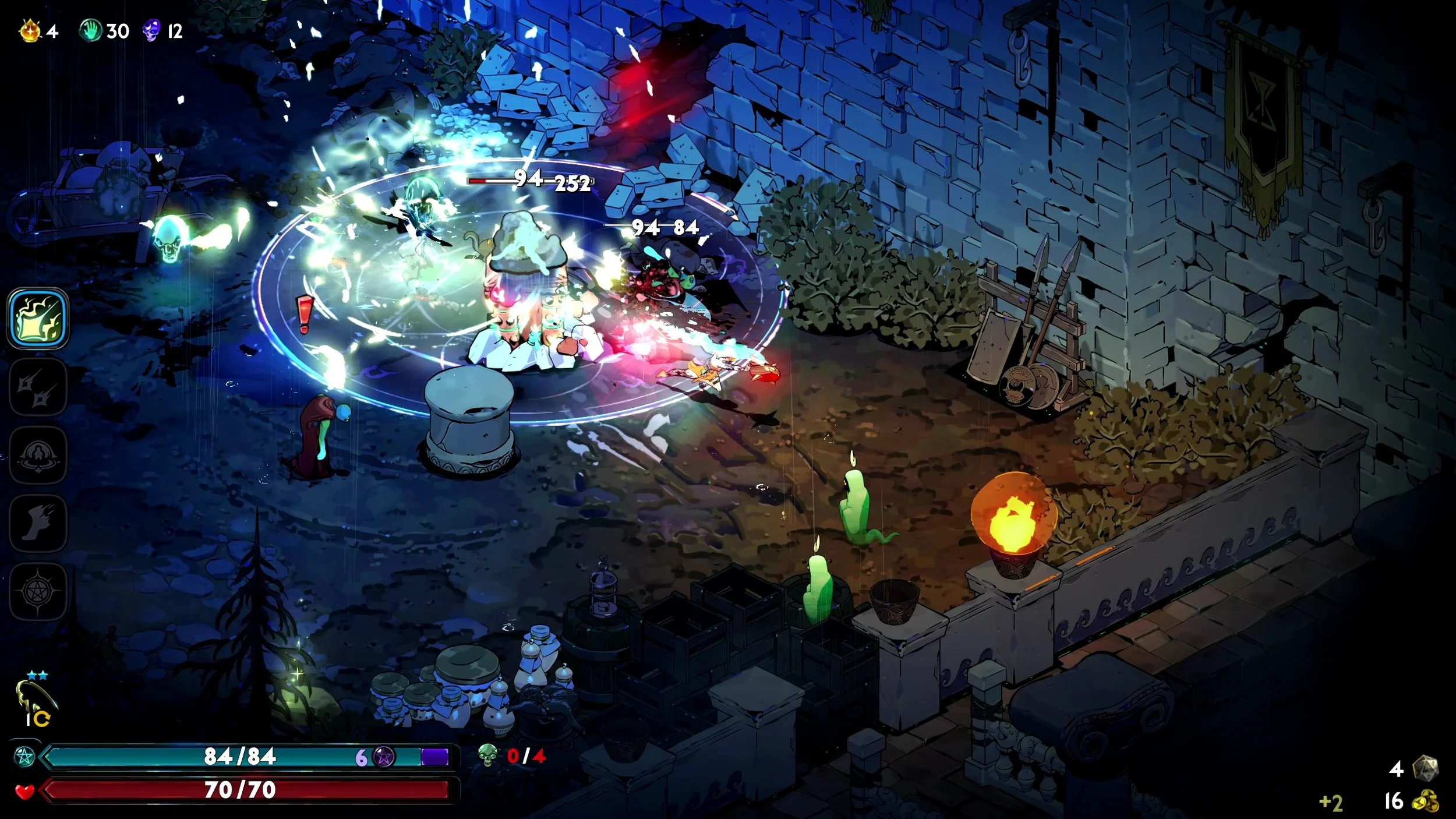
Zeus’s Blitz curse has great synergy with the Aspect of Medea.
When Hades 2 was announced, some folks, perhaps uncharitably, took a cynical view of Supergiant releasing their first sequel after more than a decade of original releases. But to me, Hades 2 always seemed like their boldest idea yet.
How do you improve upon perfection? And more importantly, why?
The jury still seems to be out for the latter question, but the former has been answered with aplomb.
Hades 2’s intertwining progression systems are a Rube Goldberg machine of joy. While the narrative-driven roguelike formula remains largely intact from the first game, Mel’s witch heritage distinguishes her from Zagreus in key ways. Because of her reliance on casting and charging up omega versions of her attacks, combat feels more committal and engaging than before, particularly when being swarmed by multiple foes at once.
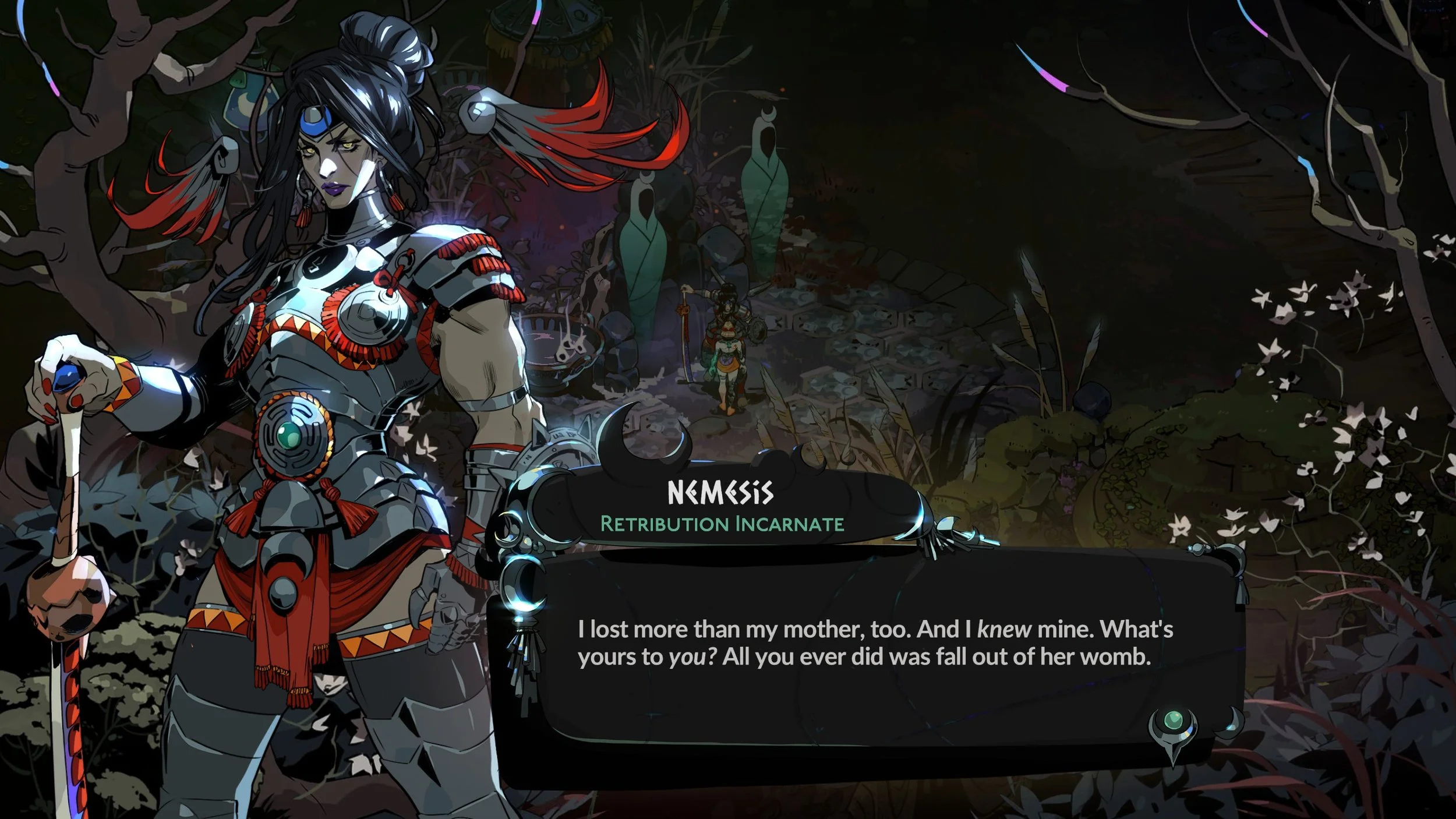
Nem is only person I would ever let talk to me this way.
And while Zagreus’s Mirror of Night progression system felt like a ladder, Mel’s arcana card system is a web, ensnaring the player with deceptively consequential choices. Take Death Defiance, for example, a staple from Hades 1 that restores a percentage of the player’s health after being reduced to zero HP. Previously, stocking multiple Death Defiances was a surefire way to survive a run.
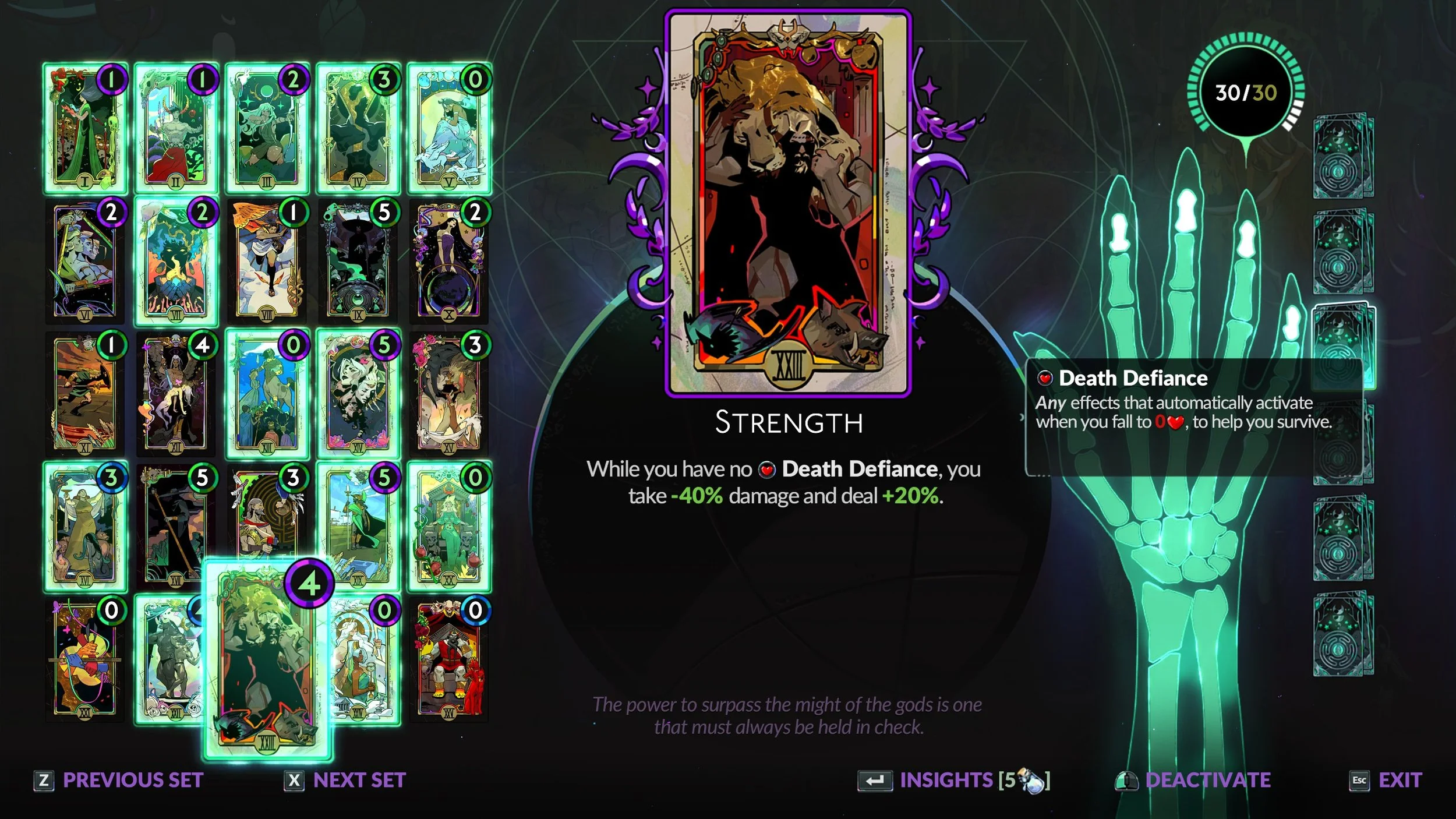
Arcana that cost 0 grasp can only be activated under specific conditions. For example, some will only activate if all arcana in a single row are also active.
Now, thanks to the Strength arcana, which grants up to 40 percent damage resistance and a 20 percent damage buff while you have zero Death Defiances, there’s an extremely compelling case to make for not using them at all. Hades 2 is littered with little tradeoffs like this, giving you a greater sense of authorship of the synergies you discover.
4. Kingdom Come: Deliverance 2
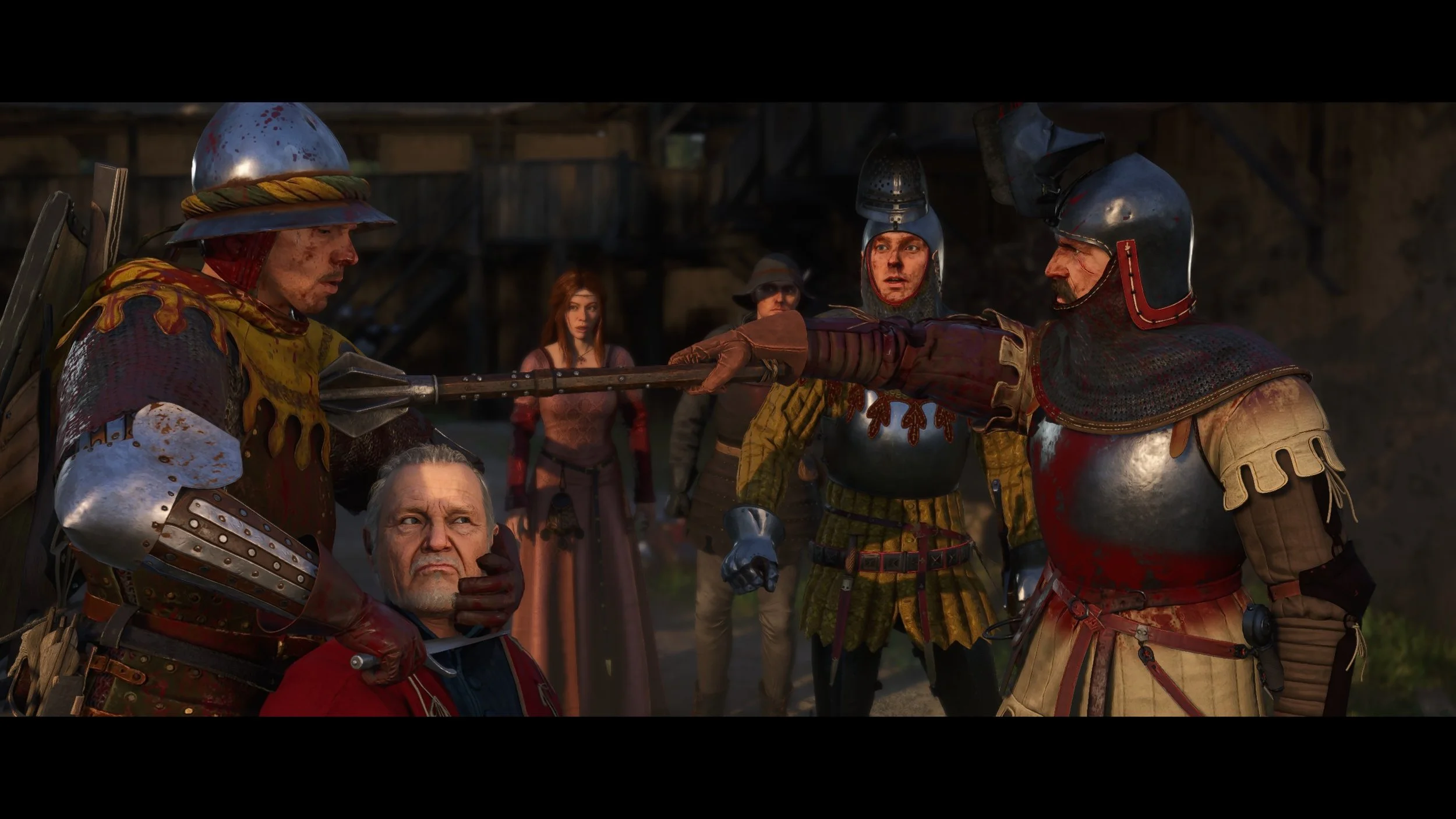
KCD2 has a great supporting cast that only becomes more interesting as the story unfolds.
Daniel Vávra, Warhorse Studios cofounder and director of Kingdom Come: Deliverance 2, seems to be a bit of a loser. His reputation legitimately put me off KCD2 until I lost an entire weekend to it in a free trial.
Perplexingly, none of Vávra’s abrasive personality is evident within the game itself. And of course, games are rarely the reflection of a single person, particularly from a developer with 250 employees.
In fact, it feels more like an outright rejection of him. Henry of Skalitz, KCD2’s protagonist, reminds me so much of Red Dead Redemption 2’s Arthur Morgan, an oddly poetic fellow surrounded by at-times despicable allies who are trying to survive a brutal world. As Henry, I felt compassion for my enemies, enjoying a night drinking under the stars with members of the same army that burned my home to the ground.
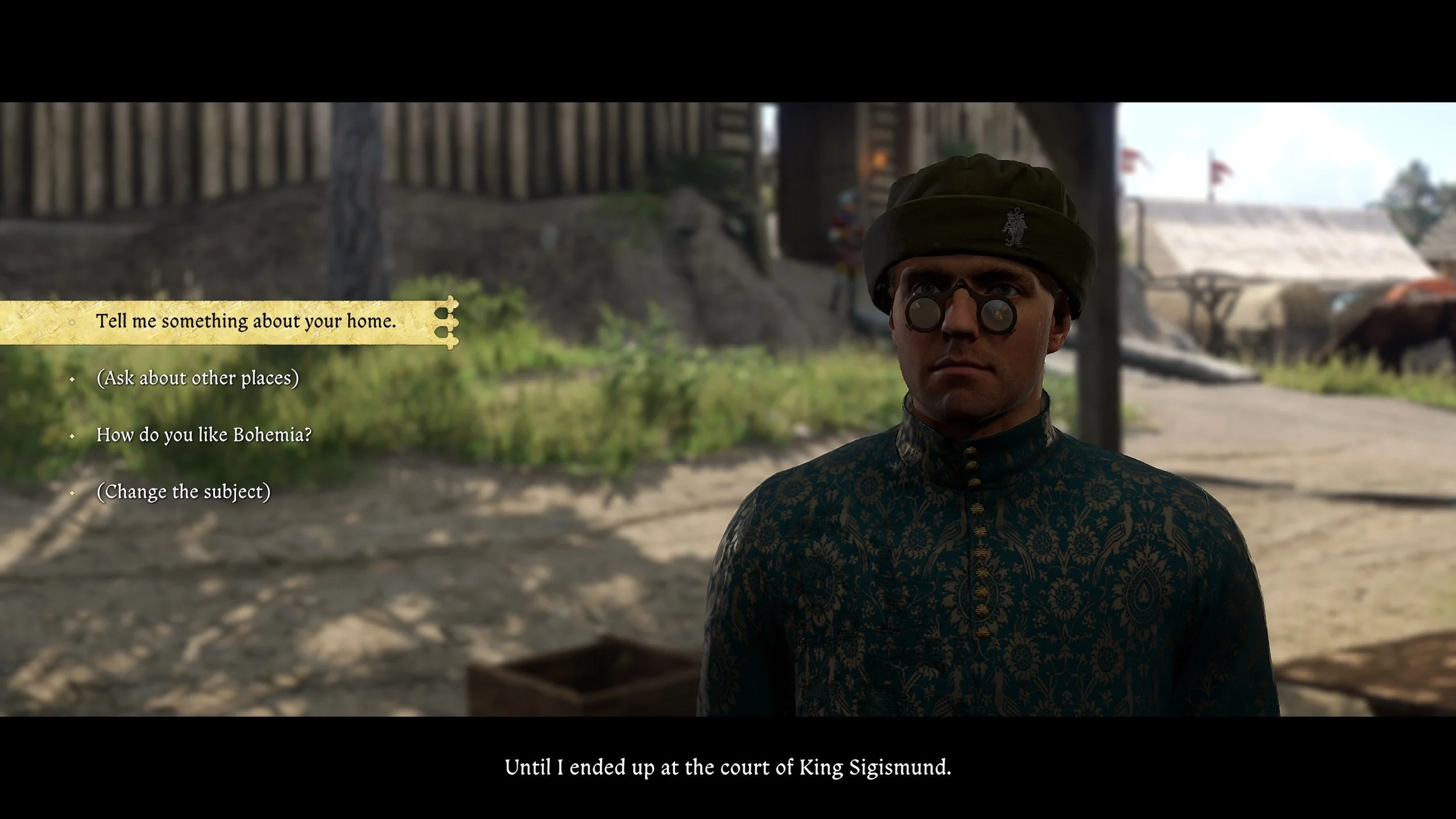
You could roleplay Henry as a dumb-dumb. But it’s infinitely more rewarding to make him an inquisitive person, since the game tracks everything you learn from NPCs so that it can be recalled in future conversations.
I broke a generational curse within a Roma caravan, and learned some of their language and culture along the way.
I became best friends with perhaps the only Black man in Bohemia, a scholar named Musa from the kingdom of Masi.
Most of what people know about KCD2 is how hostile 15th-century Bohemia is to the player from the very outset, and that’s true. A staggering amount of simulation is happening at all times that governs how people treat you, down to the clothes you’re wearing and how long it’s been since you took a bath. Crucially, one of the game’s primary systems, sneaking, will completely fail if you smell too bad. People will literally smell you coming. It’s incredible.
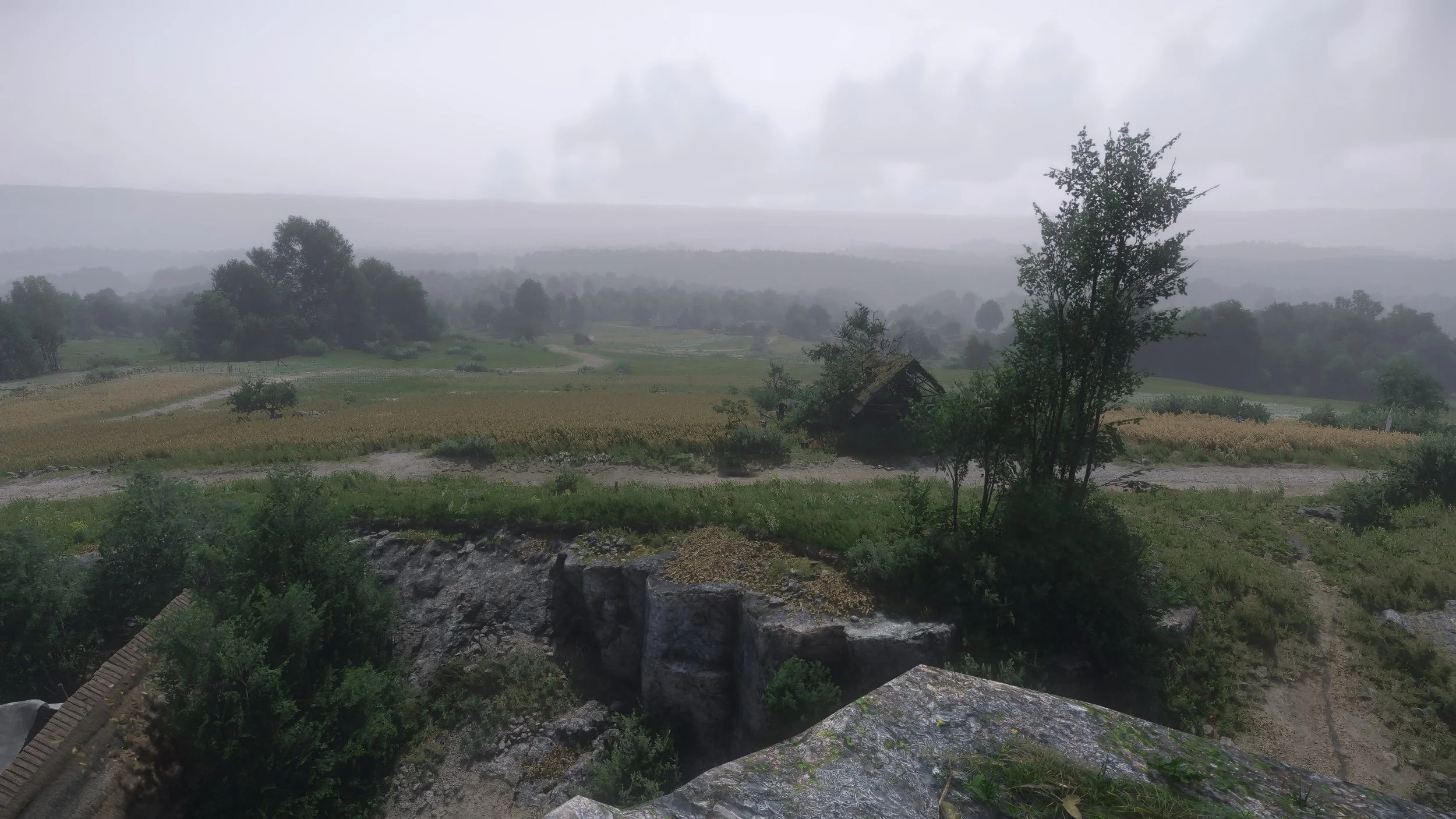
The countryside of Bohemia isn’t as densely packed as a Cyrodil or a Morrowind, but it is substantially more beautiful.
It has been 15 years since Bethesda Game Studios made a game I loved and, as far as I’m concerned, KCD2 is the successor to the work that they began. It doesn’t reward exploration nearly as frequently as Bethesda games of old, but it does reward kindness perhaps better than any video game I’ve ever played.
3. Blue Prince
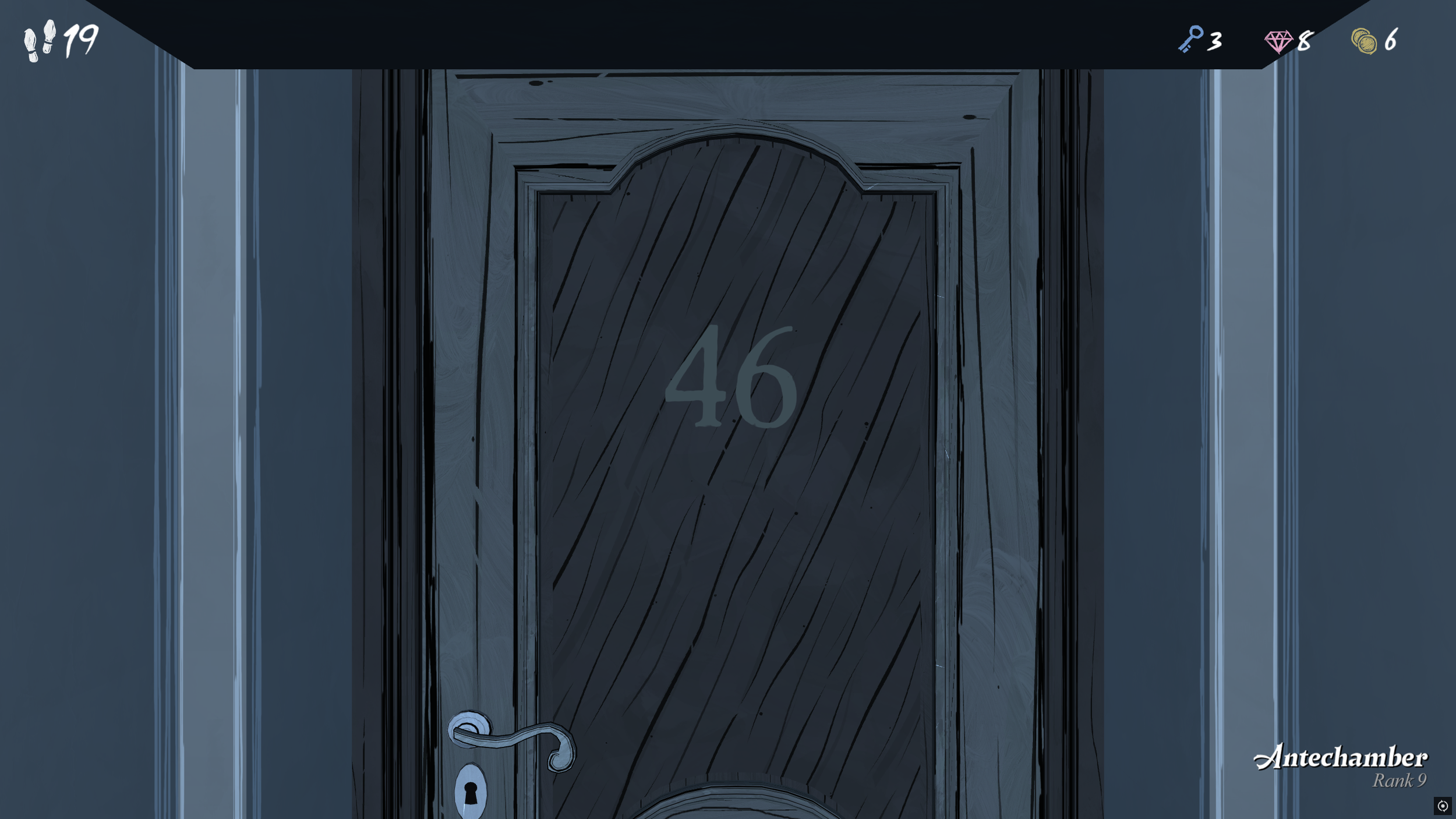
The elusive room 46 is the primary mystery at the heart of Blue Prince, but it is far from the only one.
If this were a yearbook, Blue Prince would win the “I Don’t Know How Anyone Made This” superlative. It’s a roguelike. It’s a Mystlike. An unlikely mix of eeriness and comfort even makes it a House-of-Leaves-like, too.
Step into the well-worn shoes of Simon P. Jones, sole heir of the Mt. Holly Estate courtesy of his great-uncle, Herbert S. Sinclair. There’s just one catch: Simon must navigate a 5x9 grid comprising the estate to uncover a mysterious 46th room. Unfortunately for Simon, 5x9=45.
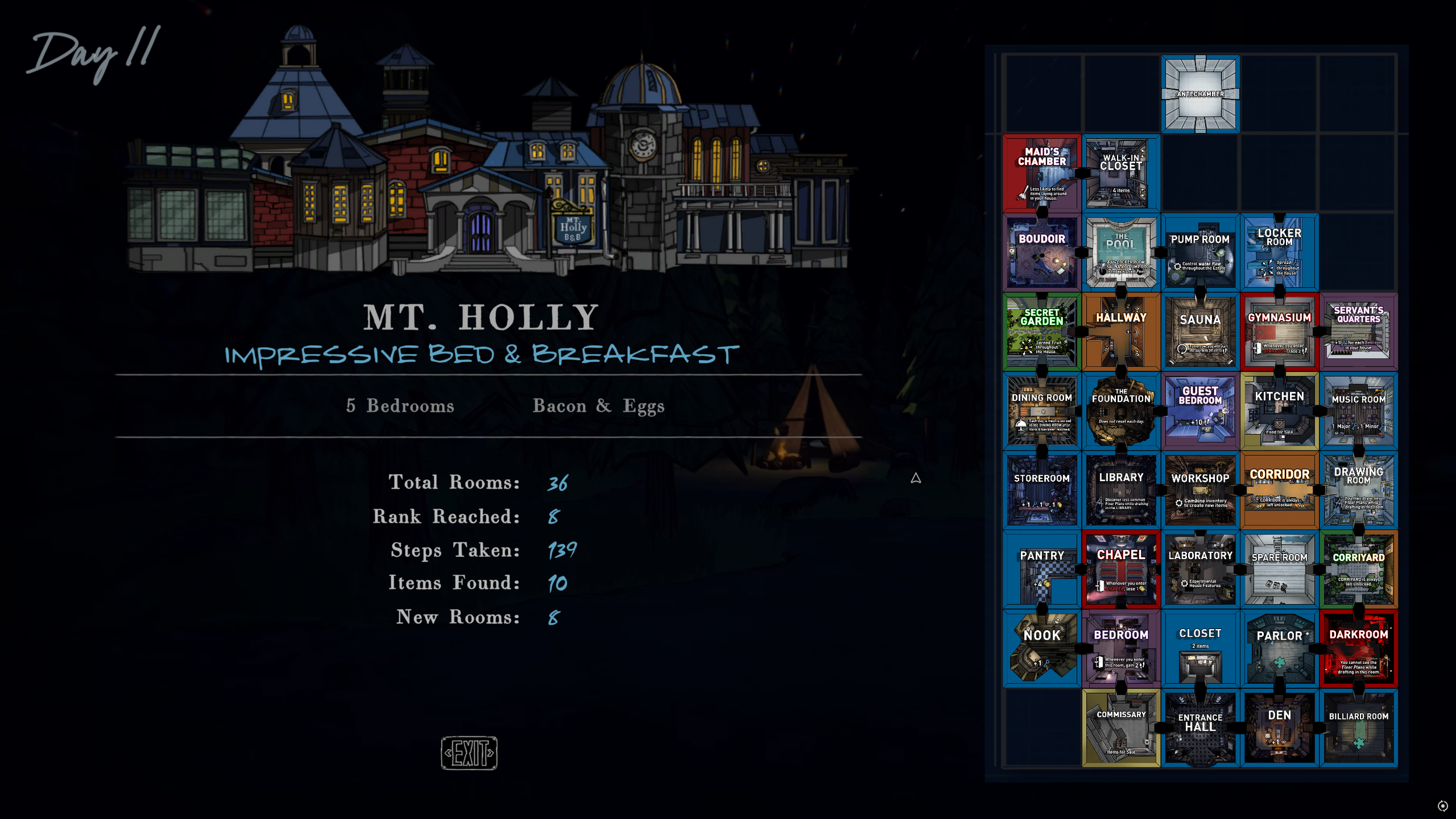
The various rooms you use to navigate the estate create a distinct identity for Mt. Holly at the end of a run.
The added wrinkle here is that you’re building the estate as you traverse it, selecting from three (usually) room types picked at random to place within the grid. Some rooms can connect to other rooms at every intersection, while others are dead ends.
You have a finite amount of steps, which represents the number of times you can traverse from one room to the next, each day. Once you exhaust those steps, you’re forced to camp outside and try again tomorrow, at which point the estate will mysteriously reset for you to try again from scratch.
Each room is a character unto itself, and you may pass through them dozens, or even hundreds, of times before you notice a detail within them that turns the entire game on its head. If you’re diligent, this will happen more times than you can count. And I should know, because I filled an entire journal with notes while playing this game. And you will too.
To obtain, something of equal value (your time and patience) must be lost. No information is free in the Mt. Holly estate, save for a letter that Uncle Sinclair leaves for you in the entrance hall. It’s this freedom that allows Blue Prince to sidestep the shortcoming that plagues most deduction games. At no point will you, the player, know more than Simon. Every bit of information you have is available to you at all times, and there’s nothing that you need to do mechanically within the game to act on a hunch that you have.
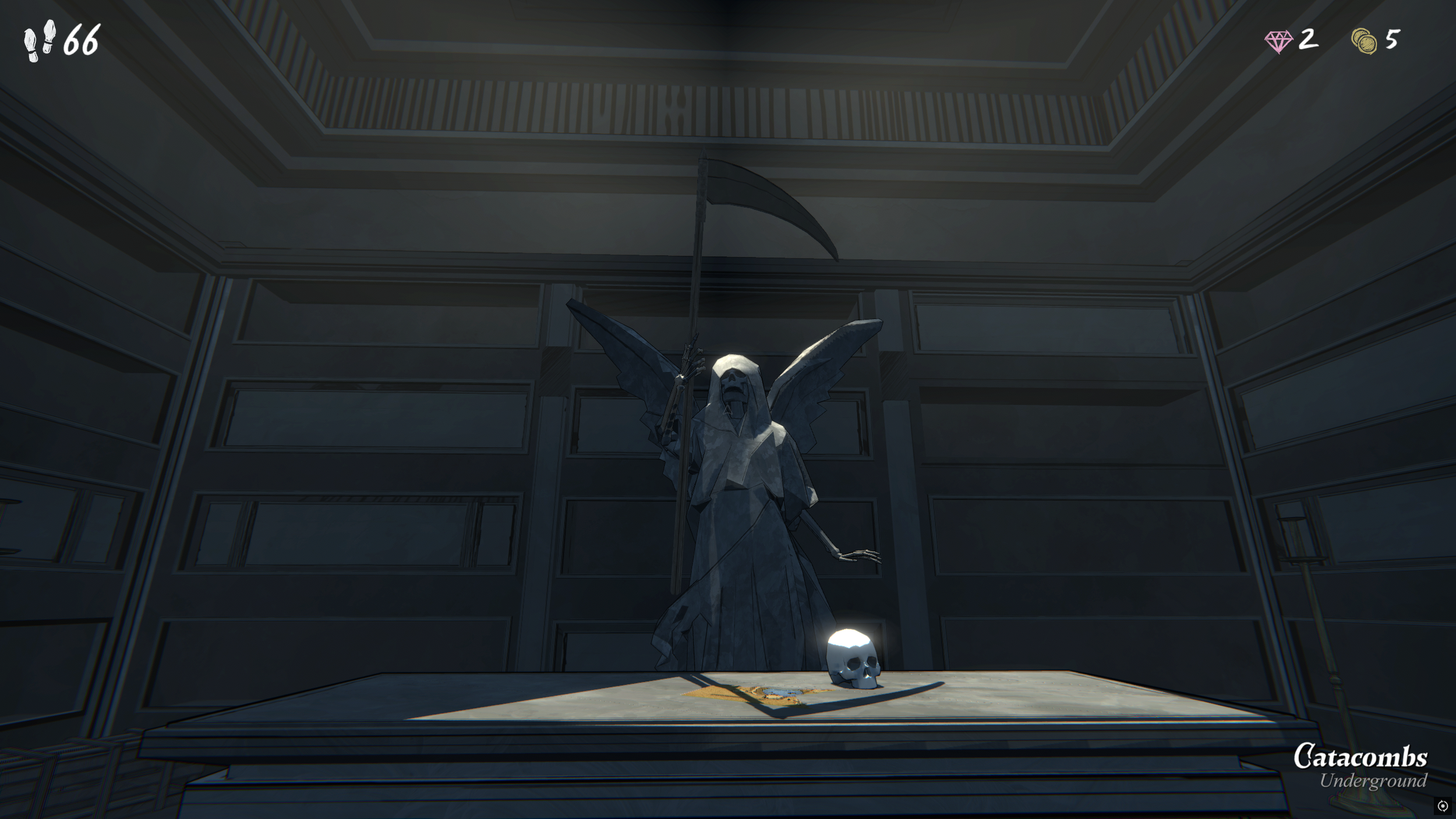
Blue Prince isn’t a horror game, but it is somber and, occasionally, very unsettling.
Enjoying Blue Prince to the fullest means not getting tunnel visioned into solving one mystery. Like most roguelikes, you have to play with the hand you’re dealt. If getting to the 46th room seems impossible with your current situation, I promise you there are other threads to pull. Even by the endgame, there is no such thing as a wasted run.
And what an endgame. I saw credits in Blue Prince after 35 hours, at which point I discovered I could spend at least twice that time delving deeper into the mysteries of Mt. Holly. I’m sure I’d still be there now, if not for the next two time sinks on this list.
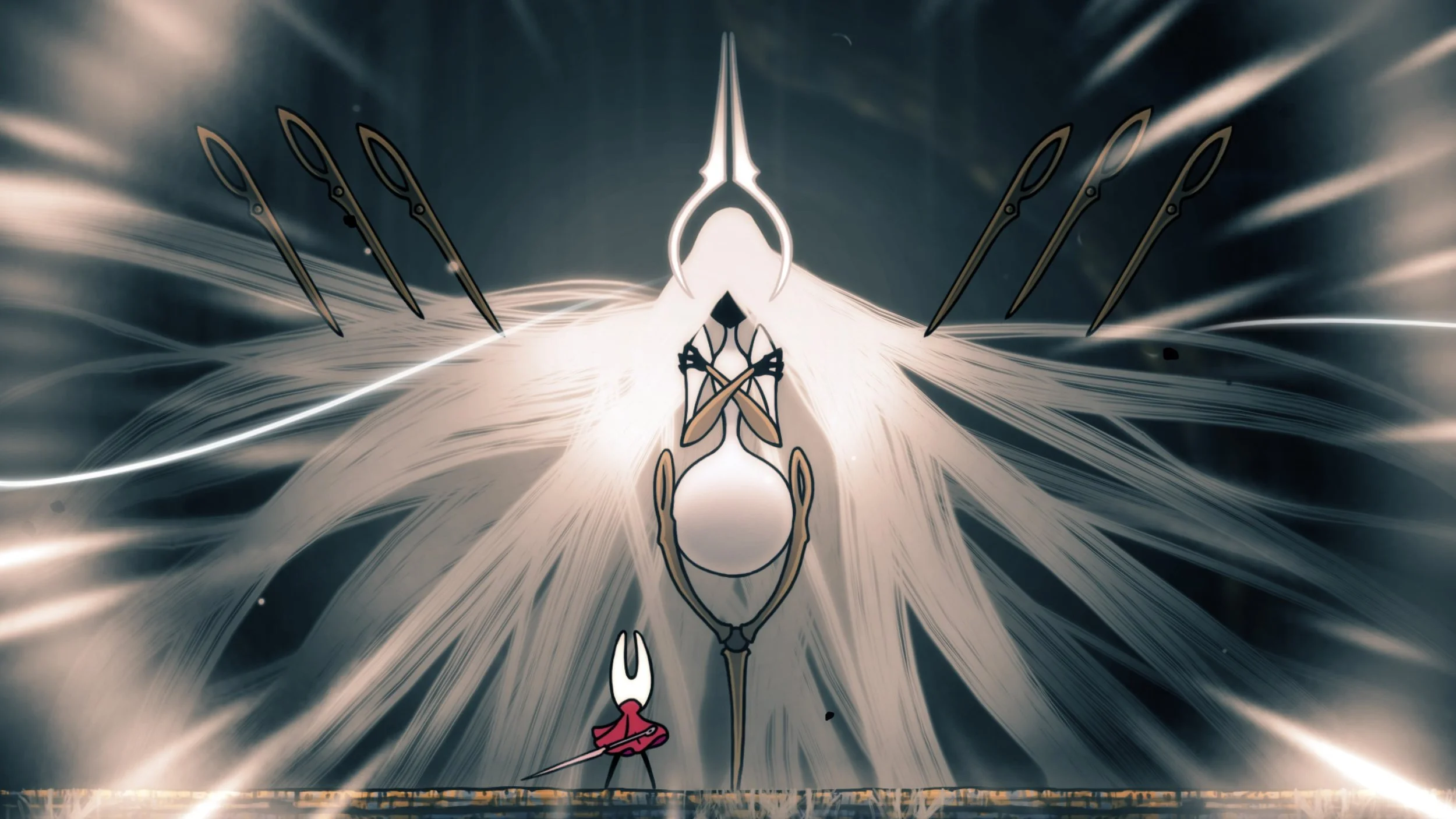
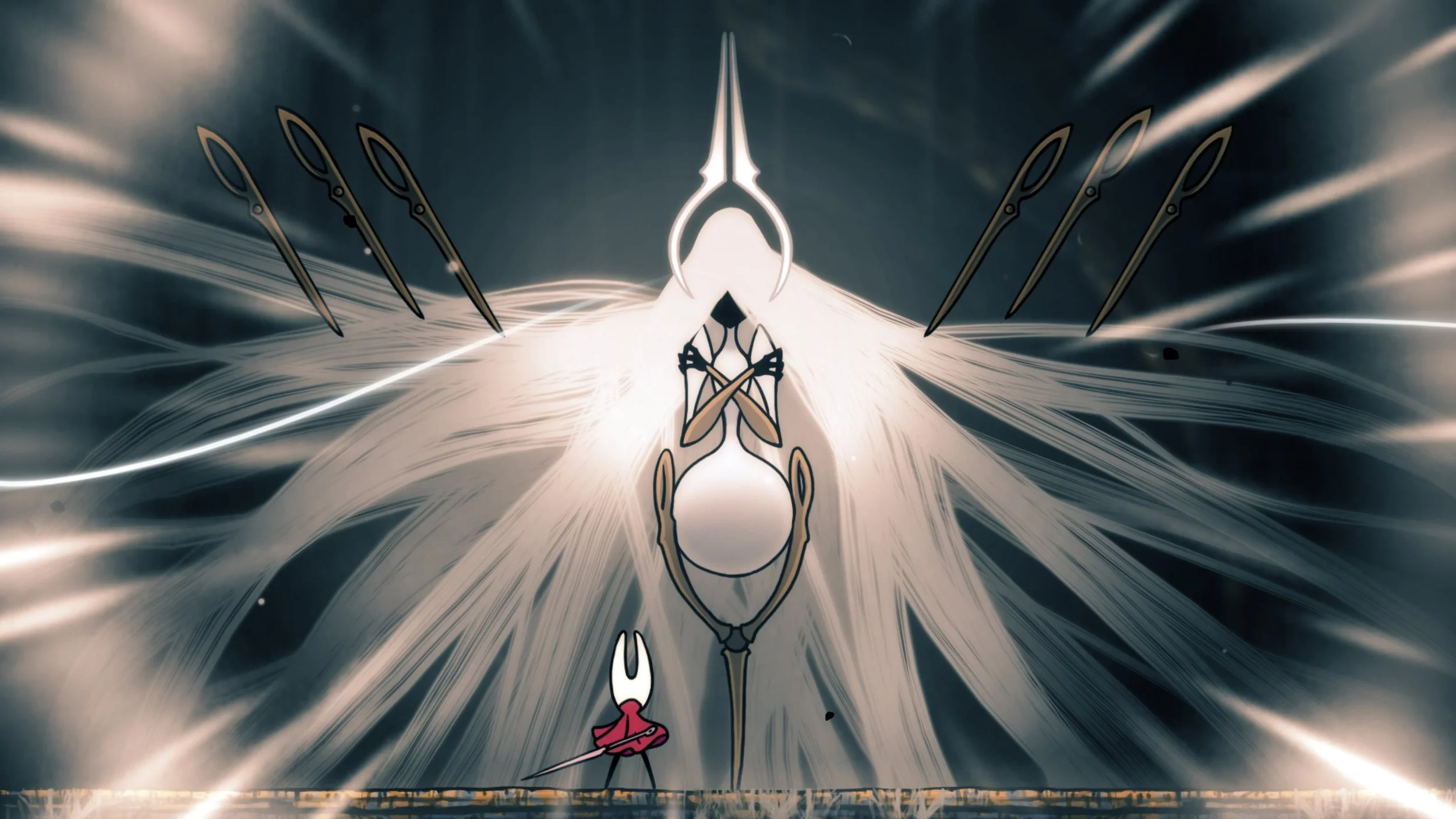
2. Hollow Knight: Silksong
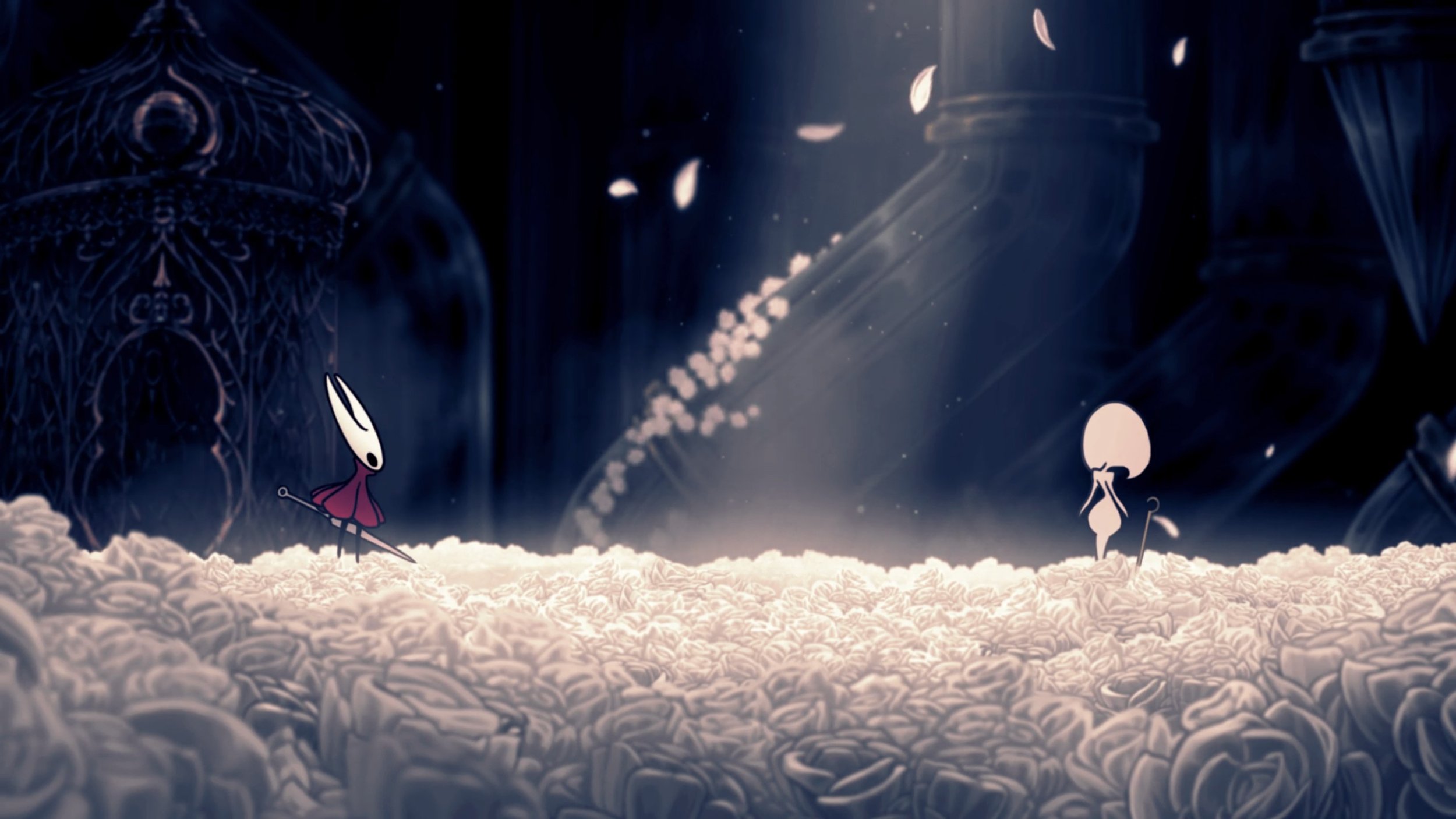
Lace is a wonderful foil to Hornet throughout her adventure.
The more I think about it, the less convinced I become that Hollow Knight: Silksong isn’t my #1 game of the year. At the very least, there’s an imperceptibly tiny amount of daylight separating the two.
Time may well prove to tell a different story, but right now I am sure of this: I don’t know if the quality of a game has ever matched my very unreasonable expectations for it in this way.
My favorite J Dilla song, Don’t Cry, is a masterclass on deconstructing a sample. The first chunk of the song lays out the raw components (the underlying sample), and then, 40 seconds in, it explodes into an entirely new sound, but one still made from those earlier components.
Silksong does a similar thing in its opening hours. Hornet, though much sassier and more talkative than the Vessel, doesn’t control all that differently from her little brother until you gain the ability to sprint. You might be thinking “Why is sprinting an ability to be unlocked? Most games allow you to sprint by default.”
It’s the wrong question to ask, but it’s a fair one. The answer is simple: It’s because you weren’t yet ready for enemies to sprint at you.
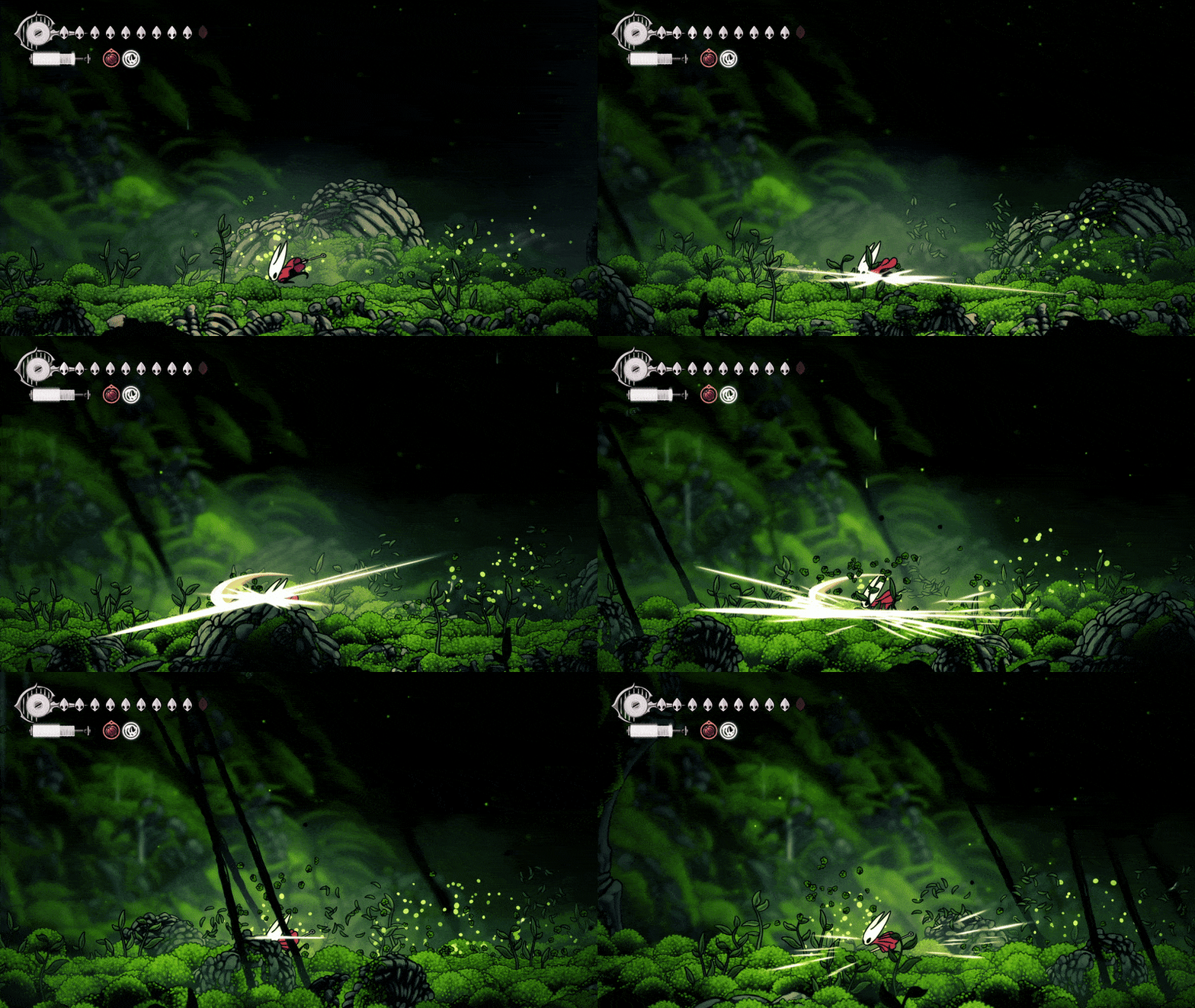
It is the most transformative sprint in any video game I have ever played. Sprinting turns Hornet into a balletic missile who can shift her momentum into offense or defense in milliseconds. And this is all before you find your first crest, which changes Hornet’s entire suite of abilities down to her basic attack. Choosing a new crest feels like picking a different character in a fighting game–it’s that substantial.
Silksong improves on its predecessor in other ways by highlighting the critical path while stuffing every nook and cranny with secrets, many of which include entire missable areas. It is a game that respects your time, skill, and ingenuity across all three acts. I do think some of its quest structure is surprisingly rudimentary (don’t even get me started on the Silver Bells wish) given how every other aspect of Silksong’s design is best in class.
A Metroid Prime 4 developer recently went on the record describing their difficulty with structuring that game’s semi-open world, citing The Legend of Zelda: Breath of the Wild as a tantalizing but doomed inspiration for a Metroidvania game. How much freedom can you give the player when the entire premise of a Metroidvania assumes some linearity based on the abilities that you unlock?
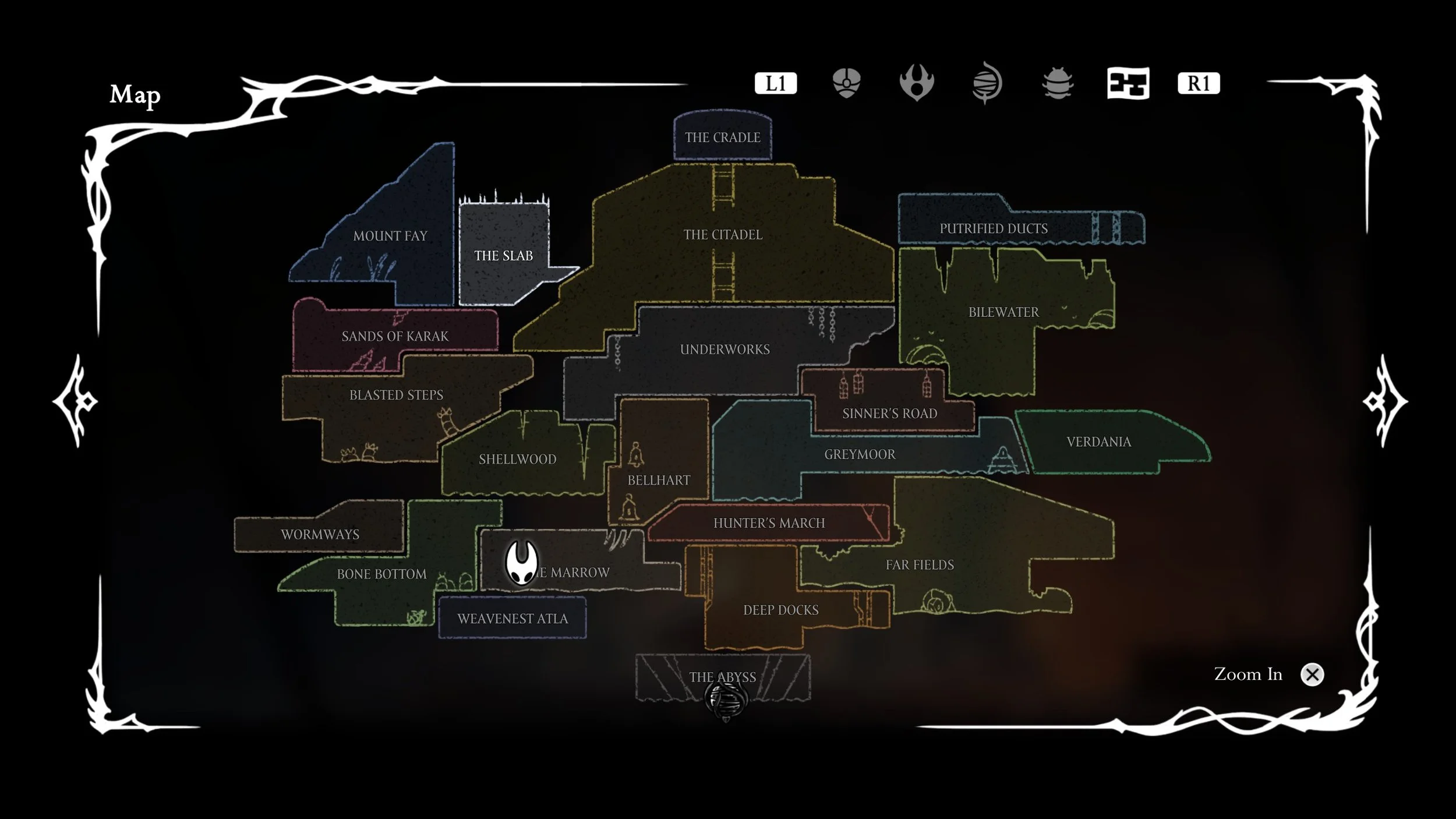
You wouldn’t believe how many of these areas are completely optional.
Team Cherry found a much more satisfying answer to that question. Silksong’s setting, the kingdom of Pharloom, feels enormous, and not a single person I’ve talked to about the game experienced Pharloom the way I did. Does a Metroidvania need to offer a Breath-of-the-Wild level of freedom in order for you to feel ownership of your own journey? Silksong is the best possible evidence that it does not.
1. Clair Obscur: Expedition 33
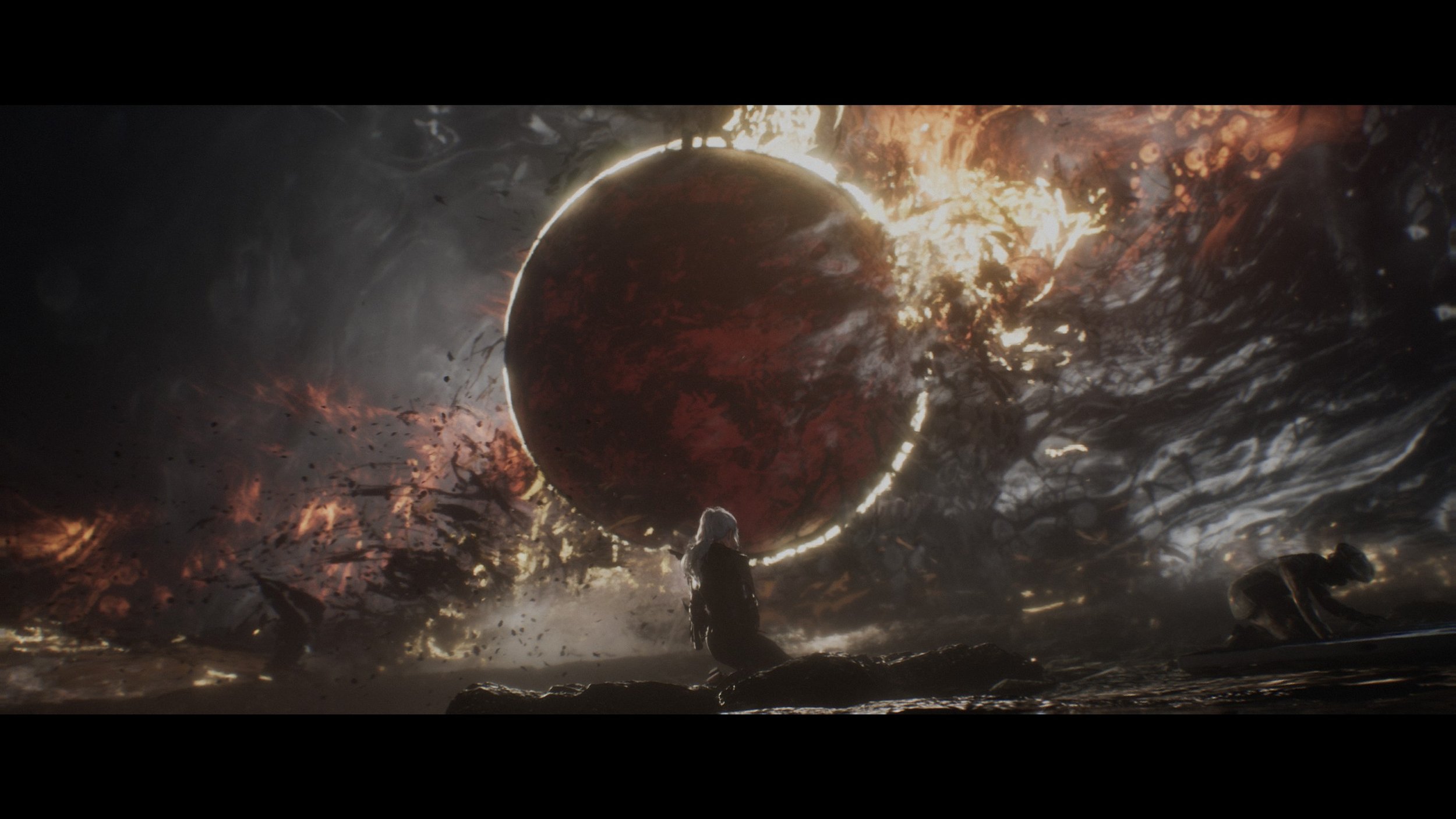
I’ve already spilled plenty of ink extolling the virtues of Clair Obscur: Expedition 33. You can read those thoughts if you want, though I’ll warn you that it’s almost as long as this entire post.
I don’t have much to add here, except that I wholeheartedly recommend it to anyone reading this regardless of your love for or familiarity with role-playing games. It is almost certainly my favorite game of this console generation thus far.
For no particular reason, I have been thinking about the meaning of art and our tendency to retreat within it in times of grief. It surprises me that moments like this, and not the recollection of me parrying a certain endgame superboss into an early (late?) grave, are the aspects of Clair Obscur that stick with me the most. It’s more than a little prescient that I find myself confronted with the forced binary of staring tragedy and injustice in the face in my news feeds every day or retreating into the warm comfort of my favorite media. Not unlike certain heroes of mine, I find it difficult to see the hidden third path.
I would really like this to be Clair Obscur’s legacy. I would settle for a JRPG renaissance, or at the very least, Square Enix being cyber-bullied into making turn-based Final Fantasy games again.
I’m worried, though, that this industry will learn all the wrong lessons from Clair Obscur. I’m worried that insatiable C-suite execs will be spurred on by the false narrative of a scrappy, small upstart studio’s meteoric rise. I’m worried that these idiots will endeavor to achieve more with less, using AI to fill in the gaps of human ingenuity. I’m worried that even if developers manage to achieve all of these things despite the hurdles in front of them, it may not be enough for them to keep their jobs.
I have little hope that this is a cycle of grief that anyone can break anytime soon, but tomorrow comes regardless.
